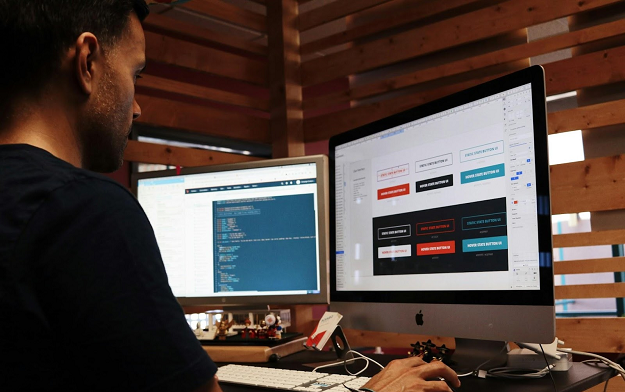
How to Improve User Experience (UX) Through Minimalist Web Design: 5 Aspects to Consider
Oct. 18, 2024
Simplicity catches attention. The less clutter, the better. Minimalist web design has gained popularity, especially on pages like https://uadates.com/moldovan-brides.html on dating websites, where the focus is solely on highlighting women without unnecessary distractions. It is not just about aesthetics but functionality and UX. When well conducted, minimalist design can make the website intuitive, easy to navigate, and fun to use.
Why Minimalism Works for Web Design
The first thing to do is to understand why minimalism works so well with web design. Think of walking into a clean, uncluttered room: the mind is at ease and focuses on what's important. The same principle applies to websites.
It's about peeling away the irrelevance to reveal only what's truly essential. In such cases, users can move easily, find what they need instantly, enjoy distraction-free experiences, and the like. Once much of that visual noise is removed, there is room to breathe, concentrate, and connect.
The Speed Factor
Probably the biggest advantage that comes with minimalist design is speedier loading. Since there are fewer elements to weigh down the site with heavy images, animations, or scripts, the site loads a bit faster. With today's world expecting a site to load in under a second, speed is everything.
Studies have proven that users abandon any website that takes more than a few seconds to load. Minimalism helps you eliminate unnecessary features that bog down performance so users never leave before they've experienced what your website has to offer.
White Space Isn't Wasted Space
The other basic element is white space, sometimes referred to as negative space. It is an empty area between different design elements. Some people may think that this is a waste of space, but that is not the case. White space allows your content to breathe and emphasizes the most important elements.
Too much information in a design, meaning too many visuals, can make users struggle to pay attention to one thing. White space performs its balancing act by directing the user's attention to necessary elements such as call-to-action buttons, images of products, or headlines. It is like giving them a break while they move around your site, processing what's thrown at them.
1. Use Typography to Communicate
In minimalist design, typography takes center stage. With fewer visual elements, your text needs to pull its weight more. Because of this, fonts have to be chosen with care. Choose clean, readable fonts that fit into your overall tone. Sans-serif fonts are often one of the favorite choices for minimalist designs because of their clean and modern look.
But that is no reason to be shy about experimenting with creative typography. Bold headlines, larger fonts for more important information, and well-considered use of color can make your text pop. Just make sure it plays nice with the minimalist theme by not overloading it with too many variants or colors. Keep it small but powerful.
2. Consistent and Clear Visual Hierarchy
It is defined as a visual hierarchy, which is the arrangement of elements to show their importance. This approach guides users' eyes through some steps in a row and says, “Here is the most important part of the page.” Whether it is a call-to-action, product image, or form, a well-structured hierarchy makes evident where users ought to focus.
Consistent spacing, aligned elements, and size variations are excellent ways to create this hierarchy. For example, making important buttons or headlines larger and using contrasting colors can instantly draw attention to them. A clean and organized design helps users know exactly what to do next, reducing confusion.
3. High-Quality Images
The minimalist design clears a page of many images, yet those few used need to be top-notch and meaningful. This means the reconsideration of sites full of stock photos in favor of meaningful visuals that actually say something.
Whether it's a product photo, a lifestyle shot, or a simple graphic, your images should be crisp, purposeful, and in harmony with the overall design. This ensures a much better user experience and furthers your brand presence and identity.
4. Color Schemes
Color plays a significant role in any design; in the case of minimalist web design, it becomes an even more vital aspect. Most designers prefer a small palette of colors to maintain simplicity and elegance. That does not, however, imply that your site must be no different from all the others and dull or monotone.
Pick up a base color and two to three accent colors that work well together. These accent colors can be placed tactically to draw attention toward desired calls to action, buttons, or links. For instance, a pop of color on a call-to-action button can make it stand out and drive people through to the points of conversion.
5. Fewer Clicks, More Conversions
Minimalist design typically means a simpler and more straightforward user flow. By reducing the number of steps required to complete an action (like making a purchase or signing up for a newsletter), you enhance the user experience and increase the likelihood of conversions.
Instead of making users click through to reach what they need, provide direct access to key information or features from the home page. Fewer clicks mean happier users—and the closer you are to completing the goals of your website.
How to Apply Minimalism Effectively
While minimalist web design does feature less “stuff,” it's not just a process of taking away until you are down to the bare essentials you need. The process requires great attention to each design decision. Here are things to remember:
- Focus on your content: Your web design should not be littered with different types of content on the same page; instead, decide what is important and design based on that. Everything else should either support or enhance that content but not draw any attention from it.
- Limit color palettes and fonts: To maintain a clean and cohesive look, try to stick to a small range of colors and font styles.
- Employ grid systems: A grid system can help you consistently align elements and result in a well-balanced layout.
- Test, test, test: Testing is the most important thing a user can do in minimalistic design. Get feedback so your site will be intuitive and easy to navigate.
- Iterate: Minimalism is a process. Sometimes, it takes refinement to find the perfect balance of simplicity and functionality.
Bottom Line
Over time, minimalist web design has grown past the label of a trend and has actually turned out to be one heck of an effective way to improve user experience. By reducing distractions, making navigation easier, and upping the focus on content essentials, you can build a website that is both visually appealing and easy and fun to use.
Where executed properly, the minimalist design enhances engagement, accelerates load times, and raises conversion rates. Whether you're redeveloping an existing site or creating a new one, consider the “less is more” approach.

Latest News

Oct. 09, 2026
Matthieu Elkaim Joins one of France's Most Iconic Production Companies, La Pac
Over the course of his career, he has created campaigns for an extensive roster of iconic brands, from Nike and Mercedes to Ubisoft

Oct. 09, 2026
Sun Valley Hands the Camera to the Mountain Community in Latest "Ski on the Sunny Side" Ad Campaign
The campaign runs from August through April 2027 across video, social, out-of-home, digital banners and email