
Soft2Bet and the Craft of Building Digital Entertainment that Lasts
Dec. 30, 2025
There is a certain kind of company you notice only after spending time inside its products. The interface feels steady. The rules feel clear. Updates arrive without breaking the rhythm. That kind of consistency rarely comes from luck. It comes from a culture that treats product work as a discipline, where design, engineering, and quality sit at the same table.
A useful lens on that discipline shows up in this deep dive on Soft2Bet, which walks through how cross-team collaboration shapes real releases, especially around engagement systems that have many moving parts.
-
A company built around product loops
Modern platforms are living systems. They handle identity, payments, content delivery, personalization, and reporting, all while needing to stay responsive and stable. In that environment, the most underrated skill is coordination: the ability to move from idea to feature to measured outcome, then back again, without losing clarity.
Soft2Bet's public materials describe a model where Design, Technology, and QA interact in a structured cycle, using MEGA as a clear example of that workflow. The interesting part is the emphasis on process, not slogans. When teams share a consistent "how we build" pattern, the work starts to look less like separate departments handing off tickets and more like a single workshop with specialized tools.
That matters for two reasons.
First, engagement features are fragile. A reward system may appear innocent in a prototype but may lead to unforeseen load issues in production. Second, because the teams may be working on different markets and different brands, it has to be possible to reproduce the new module without bringing everything to a grinding halt.
In short, the Soft2Bet team message is to favor creating systems that could be reusable and scalable and to retain quality checks near the development stage instead of applying quality as a final gating process.
-
Gamification that feels like a roadmap
Gamification can be a noisy word. Some teams treat it like decoration: badges pasted onto existing flows. Others treat it like behavioral design: a structured way to guide attention, reward effort, and help users understand progress.
Soft2Bet positions MEGA as a standalone gamification solution designed to lift engagement and lifetime value, with integration described as API-based and meant to work across different contexts. Industry coverage also frames MEGA as a set of customizable “engines” where reward levels, triggers, segmentation, and difficulty can be tuned, which suggests an approach closer to systems design than one-off campaigns.
A way to put this into practice is to look at two types of progress:
- Invisible progress: Users are doing things, value is being created, but there's no perception of movement.
- Progress that is visible: users see a map, a streak, a mission, a collection, a level, or a narrative marker that makes time spent feel coherent.
MEGA’s descriptions lean toward the second. It’s built to make progress legible and repeatable, so engagement comes from understanding what happens next, not from constant surprise.
Here are a few signals that gamification is being treated as a product discipline rather than surface polish:
- Clear triggers: users understand which actions move progress forward.
- Stable rules: rewards feel consistent across sessions.
- Modular components: missions, collections, and challenges can evolve without rewriting the whole experience.
- Testable outcomes: retention and repeat sessions can be measured at feature level.
- UX alignment: visuals and progress indicators support the same story across devices.
This is where the niche detail matters. A well-built gamification layer can also help reduce friction in the user journey. When users know what they are "working toward," navigation becomes lighter. Decisions become easier. That reduces support burden and makes the experience feel more intentional.
-
Local markets, shared foundations
One of the hardest problems in regulated digital entertainment is building a platform that can adapt to local requirements while keeping a consistent core. When every market has its own expectations, the temptation is to create separate builds for everything, then struggle with maintenance forever.
Soft2Bet describes a modular, API-first approach and frames MEGA as a separate core that can be connected into different brand contexts. That kind of architecture is a quiet advantage: it supports localization without turning every new launch into a full rebuild.
The other side of localization is culture. Users in different regions respond to different pacing, visual language, and reward psychology. Soft2Bet’s process write-up emphasizes designing with market context in mind while keeping components reusable, which is a practical compromise between “one global template” and “everything custom forever.”
This also explains why “release rhythm” becomes a strategic asset. If updates arrive regularly, the product can learn. Teams can ship improvements, measure behavior shifts, and keep refining without dramatic relaunches. The Knowledge Guru piece highlights frequent iterations and coordinated release work across teams, which fits that idea of continuous learning.
-
What a thoughtful platform culture looks like
A platform company often gets judged on features, yet the real story is how reliably those features can be delivered. Soft2Bet’s recent news posts highlight recognition for its platform and product launches, including awards tied to MEGA and leadership. Awards, while not the entire story, can be considered an indication from the outside world that notice is being taken of work in products.
More useful way to judge the worth of any platform that allows people to interact would be to ask the kinds of questions that show if the company is actively planning for the long term future of:
- How is engagement balanced with sustainable reward design?
- How does the product prevent “feature fatigue” as new mechanics appear?
- What is the strategy for segmentation so different user types get appropriate pacing?
- How are peak-load scenarios handled when a popular mechanic spikes traffic?
- How does QA validate user journeys across devices and edge cases?
Soft2Bet’s public process description keeps circling back to the same theme: coordinated teams, modular architecture, and quality work integrated into the development loop. That combination tends to produce products that feel calm even when the underlying system is complex.
In the end, the most compelling part of Soft2Bet’s story is not a single feature. It’s the way product craft is treated as an operational habit: design that respects real user journeys, technology that supports scaling, and QA that protects the experience before issues reach the public. When those three move together, innovation stops being a gamble and starts becoming a repeatable outcome.

Latest News
Oct. 16, 2026
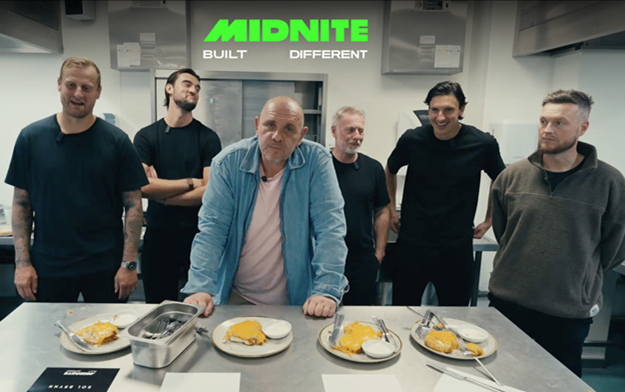
Midnite Serves 1,000 Free Chicken Parmos to Boro Fans This Weekend
Earlier this month, Middlesbrough legends went head-to-head with current first-team players in a Parmo Cooking Challenge
Oct. 16, 2026
Only One in Four UK Adults Recall Live Brand Experiences, but 96% Take Action
Of those who acted, 91% said the experience influenced what they did; product trial was associated with stronger future brand consideration